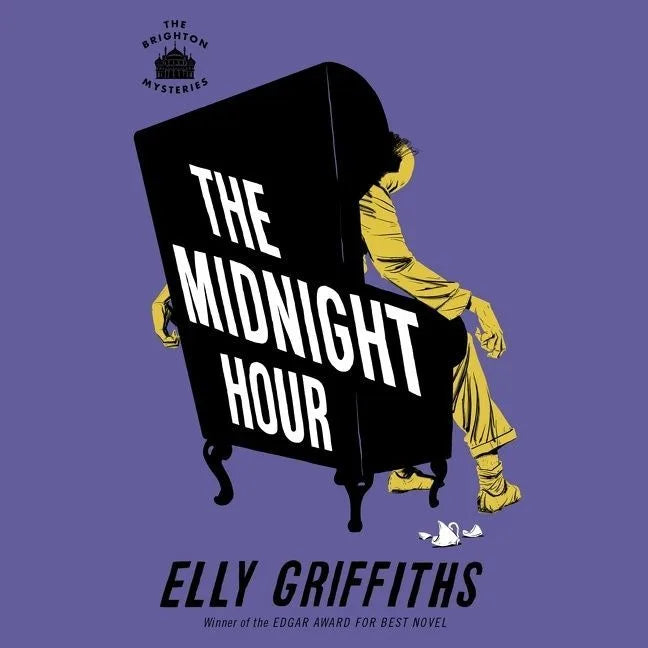

The Midnight Hour

Brighton Mysteries - Book 6

The Midnight Hour


Unabridged

Sale price $20.80 Regular price$25.99
Save 20.0%
Quantity:
Add to wishlist
  • Cancel anytime!
  • Memberships will renew every month
  • One credit every month on renewal
  • You can spend 1 credit every month to get an audiobook
window.theme = window.theme || {}; window.theme.preorder_products_on_page = window.theme.preorder_products_on_page || [];

“Halloween provides the perfect setting for another triumph of misdirection from Griffiths in this sixth Brighton Mystery.”

Booklist (starred review)


The Brighton police force is on the hunt for another killer, but this time they have some competition—a newly formed all-women’s private eye firm, led by none other than the police chief’s wife.

Newly minted PI Emma Holmes and her partner Sam Collins are just settling into their business when they’re chosen for a high-profile case: retired music-hall star Verity Malone hires them to find out who poisoned her husband, a theater impresario. Verity herself has been accused of the crime. The only hitch—the Brighton police are already on the case, putting Emma in direct competition with her husband, police superintendent Edgar Stephens.

Soon Emma realizes that Verity’s life intersects closely with her own—most notably in their mutual connection, Max Mephisto, who has returned to England from America with his children and famous wife, Hollywood star Lydia Lamont. Lydia, desperately bored in the countryside, catches wind of what Emma and Sam are up to and offers her services. What secret does Lydia know about Verity’s past?

The team of female PIs circle closer to the killer, with the Brighton police hot on their tail. The clues suggest they’re looking for a criminal targeting the old music-hall crew. How long will it be before that trail leads straight back to Max?

Ratings & Reviews

Review guidelines

100% of listeners recommend it of readers recommend it

Overall 100%

Based on 1 rating

Listened to this one? Read this one?

Share what you thought and help others decide.

Sign in to write a review

  1. Sarah
    Overall Liked it

    An engrossing murder mystery set in 1965

    The Midnight Hour is an entertaining and engrossing mystery, somewhat lighter in tone than Elly Griffiths' Ruth Galloway books, but just as well-written in terms of plot and character development. I'd recommend it to any reader who enjoys traditional-style murder mysteries and engaging female protagonists. It's 1965 and Emma Holmes and Sam Collins, who have recently opened their own private investigations agency, are called in to investigate after the sudden death of retired theatre impresario Bert Billington at his home in Rottingdean. Billington's death at first appears to have been by natural causes, but is subsequently determined by police investigators to be a poisoning. His widow, former show girl Verity, is keen to dispel suspicions that she's responsible, engaging Emma and Sam to find the real culprit. As they sift through the evidence, including a few red herrings, and gradually untangle the complex web of relationships that exists between the various parties, Emma, Sam and WPC Meg Connolly hurtle towards a dramatic climax. This novel departs significantly from earlier instalments in the series, which featured Brighton CID detective (now Superintendent) Edgar Stephens and magician-actor Max Mephisto as central protagonists. In The Midnight Hour, it is Stephens' wife Emma Holmes, a former police detective herself, together with her investigative partner Sam Collins and WPC Meg Connolly, who feature most prominently, with Stephens and Mephisto playing their roles as supporting characters. This change enables Elly Griffiths to explore the issues facing working women in the 1960s, and the embedded misogyny that existed in both the public and private spheres. The historical setting also allows Griffiths to draw in contemporaneous events, such as Sam's coverage of the arrests of Ian Brady and Myra Hindley, perpetrators of the notorious "Moors Murders", adding verisimilitude to the narrative.