
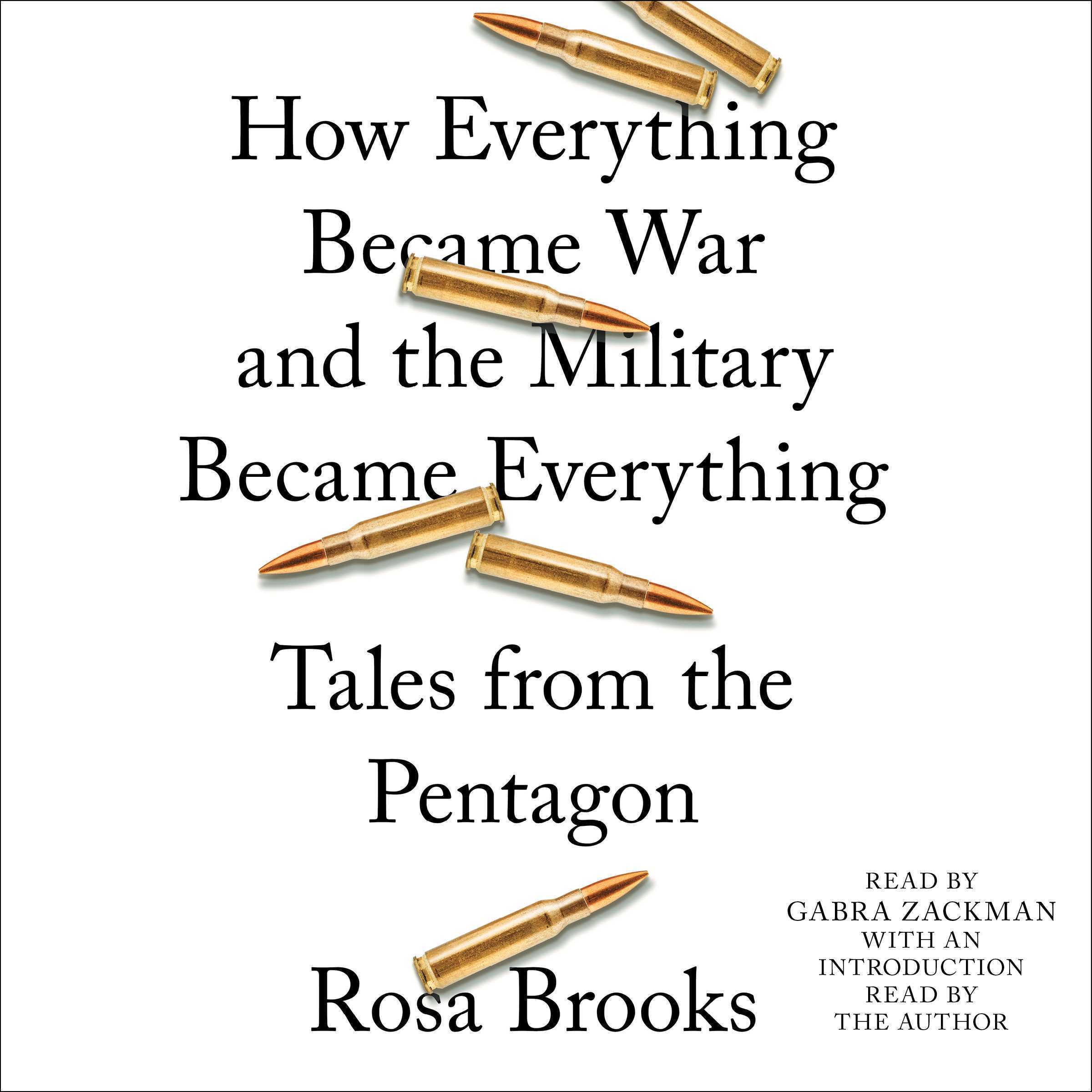

Excellent analysis of some key areas of modern war including drone strikes but it has some limits
I’ll be honest. It took me two attempts to get into How Everything Became War and the Military Became Everything. This book blends scholarly analysis and personal memoir, and I didn’t take to it immediately. Yet, Rosa Brooks has written an excellent analysis of warfare in the 21st century, specifically drone strikes. She puts it in the context of both recent history and modern culture, and it is a nice addition to any reader’s bookshelf or audible library. Brooks, a human rights scholar, who worked in both the State and Defense departments of the Obama Administration, is at her best when discussing what she knows best—the application of international law to questions of use of force and armed conflict. Her analysis is clear and precise and helps readers better understand what it means to use drone strikes to kill your enemies as opposed to traditional means of warfighting. Her discussions includes the “murky” areas of special ops, CIA ops, and the problems of applying law to terrorism. Brooks echoes the often heard claims that we are using the military to solve every problem and that by doing so, we are wearing it out. She does offers some good insights into the politics and processes of the national security establishment—not always pretty. She is not as good when venturing into questions about military recruitment, force structure and personnel management. In addition to her time at the Pentagon, Brooks is a military dependent, who married a Special Forces officer at the end of his career, and from that perspective, offers some less well-developed analysis. Her comments that all recruits don’t need the same level of physical fitness, since 85% of the force is not combat arms; that military post housing, commissaries, and post exchanges are a wonderful boon, and that military retirement and Tricare health care are overly generous benefits, belies a limited and incomplete understanding of how the real military life works. A few more deployments, PCS moves, and more time standing in line at medical clinics would likely change that point of view. Nonetheless, with that caveat, I do recommend this book as an overall good read and worth your time. It is well-written and read in a similar manner by the author (the intro) and Garba Zackman (the rest of the book).