
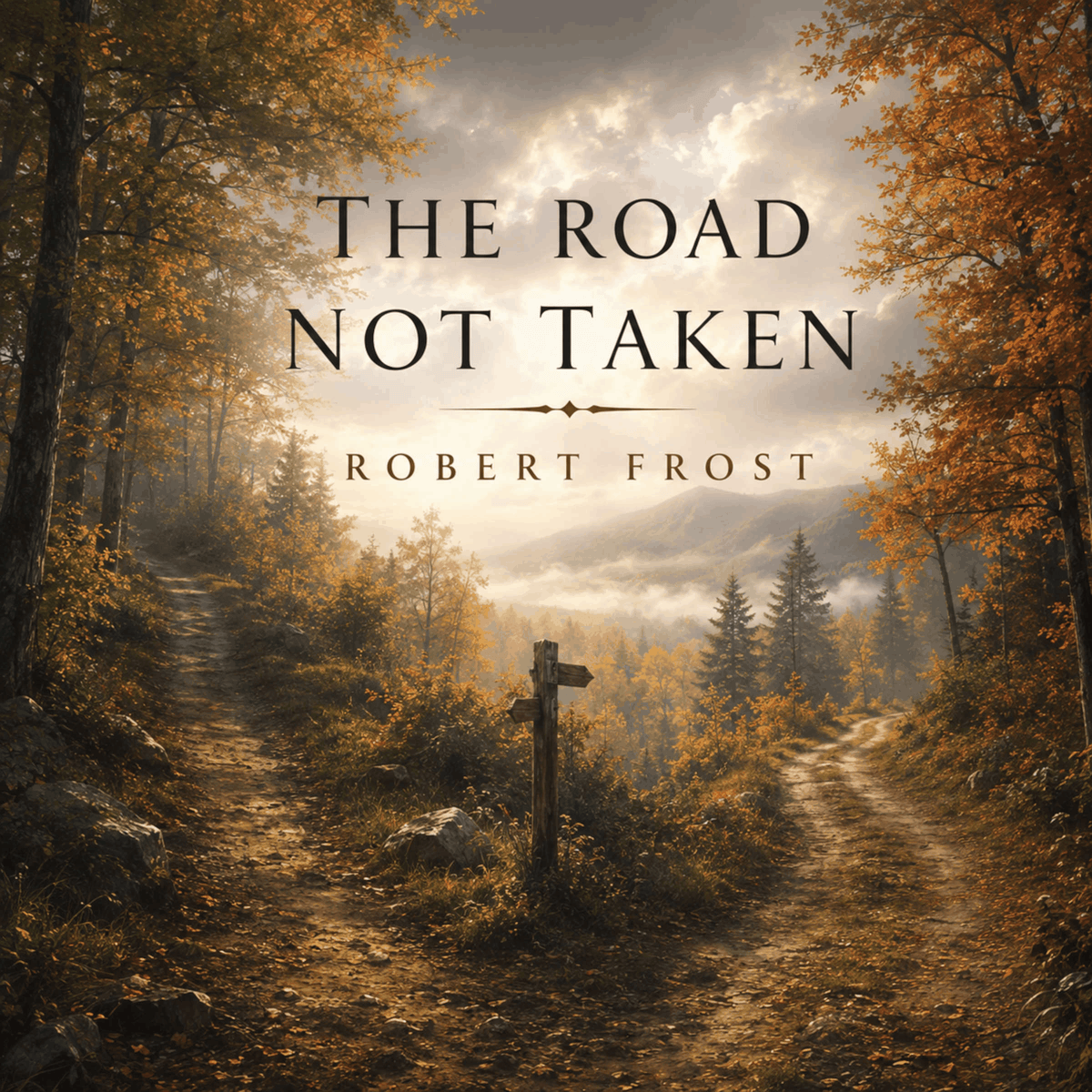
The Road not Taken

Monthly Membership
Cancel anytime!
Memberships will renew every month
One credit every month on renewal
You can spend 1 credit every month to get an audiobook
Few poems have been quoted as often—or misunderstood as thoroughly—as Robert Frost's The Road Not Taken. Published in 1916, it presents a traveler confronted with two diverging paths in a yellow wood and forced to choose between them. On the surface, it looks like a celebration of individuality and choosing the unconventional path. But Frost deliberately makes the two roads almost indistinguishable: both are described as equally worn, and the speaker cannot know where either would have led.
The poem is ultimately less about choosing the right path than about what happens after a choice has been made. We cannot live both possibilities, so the road we did not take inevitably becomes part of our imagination. Years later, the speaker anticipates telling the story with a "sigh," transforming an uncertain decision into a meaningful narrative about his life. Frost wrote the poem partly as a playful response to his friend Edward Thomas's indecisiveness, which helps explain its subtle irony.
Its enduring value lies in this ambiguity: we must make decisions without knowing their consequences, and afterward we often construct stories that make those decisions seem more deliberate and significant than they actually were.
Praise