
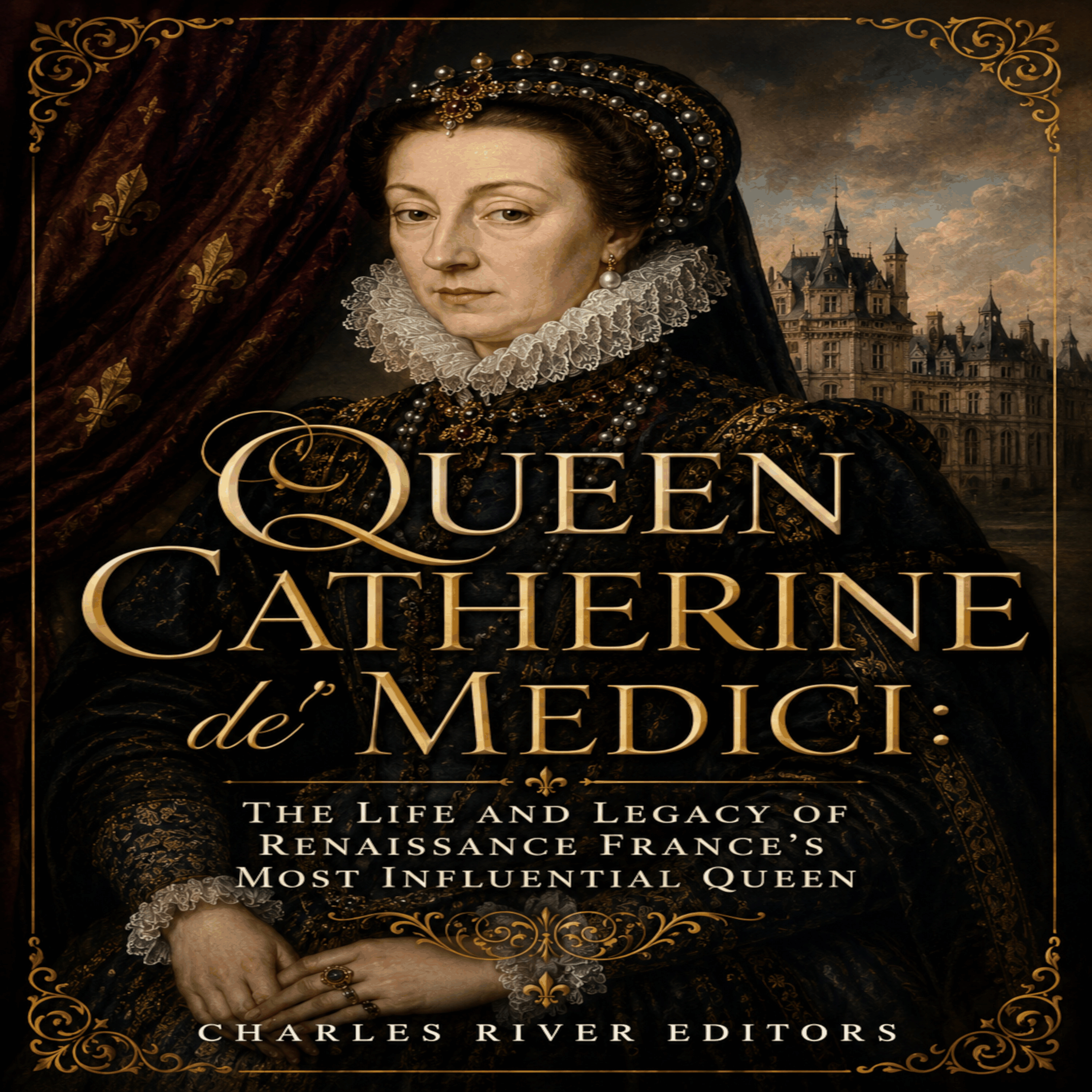
Queen Catherine de' Medici: The Life and Legacy of Renaissance France's Most Influential Queen

Monthly Membership
Cancel anytime!
Memberships will renew every month
One credit every month on renewal
You can spend 1 credit every month to get an audiobook
For 300 years, the memory of France's Queen Catherine de' Medici came down to posterity wrapped in poison. She was the wicked Italian queen of the storybooks, a Florentine schemer who kept a cabinet of venoms, a stable of astrologers, and killed her enemies with a pair of perfumed gloves or a poisoned book. She was accused of plotting the great slaughter of French Protestants that stained the feast of Saint Bartholomew in 1572. As the mother of three French kings, she was depicted as a Machiavelli in a black widow's gown, using her twisted genius to bend the will of her three weak sons. Her legacy left her cast as one of the most durable villainies in European history, but, in most of its details, it is mostly fiction.
The woman behind the legend was arguably less lurid and more remarkable. Catherine de' Medici was born in Florence, orphaned within weeks of her birth, married off as a teenager to a French prince who never loved her, and ignored for a quarter of a century at a court that regarded her as a foreign merchant's daughter with no royal blood. Then, in her middle age, chance and catastrophe placed the government of France in her hands, and she held it, against every probability, for nearly 30 years. As the mother of the future kings of France, she ruled in their names as a regent and steered the French monarchy through the longest and bloodiest religious wars in its history, not as a fanatic for either faith but as a pragmatist who cared above all for the survival of the crown and her sons who were fated to wear it. She negotiated, married her children across the courts of Europe, built palaces, staged spectacles, and traveled the roads of a divided kingdom in endless pursuit of a peace that always seemed to slip away.
That she failed in the end is part of her tragedy. The dynasty she fought to preserve, the House of Valois, was extinguished within months of her own death, and the throne passed to the rivals she had spent her life trying to contain.
Praise