
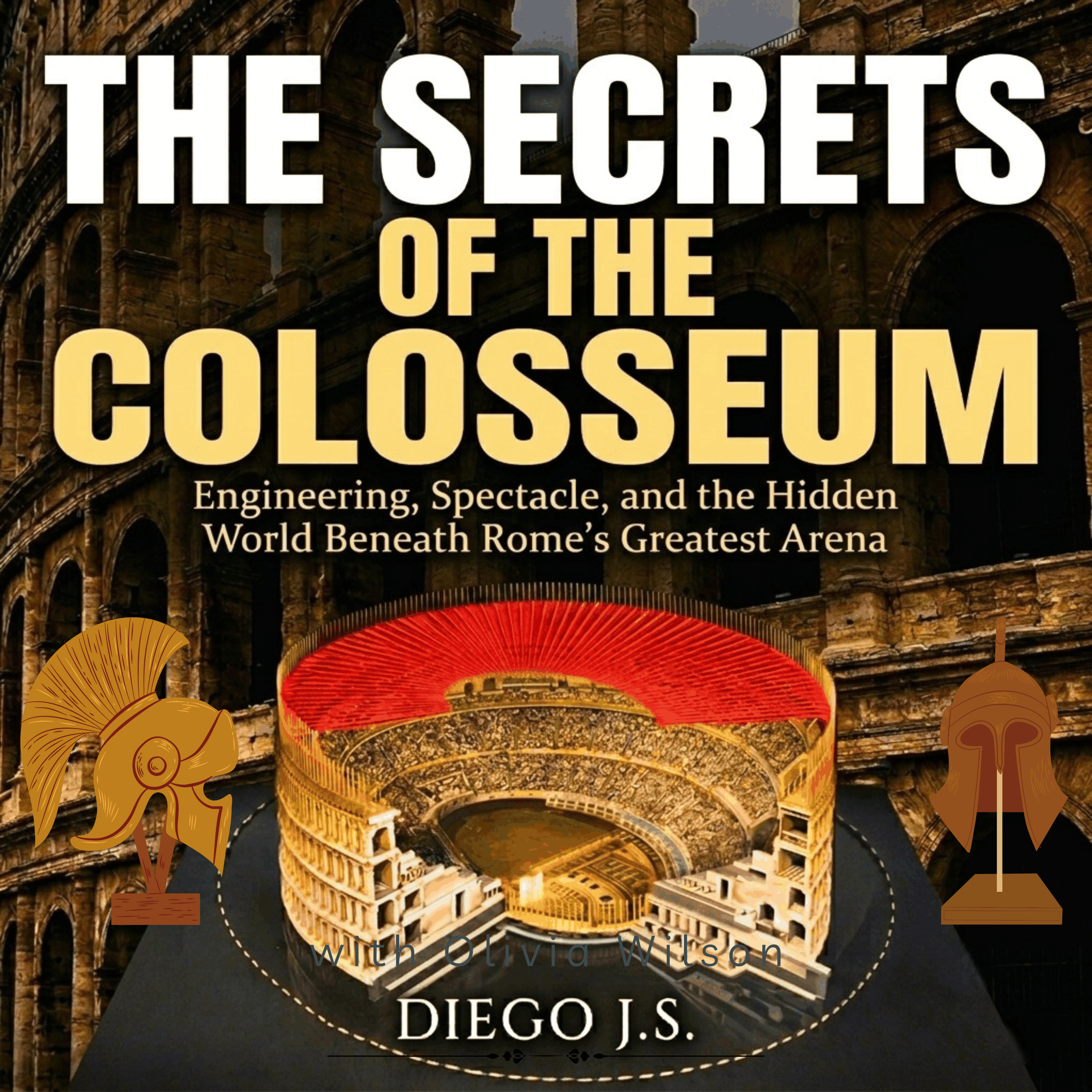
The Secrets of the Colosseum

Monthly Membership
Cancel anytime!
Memberships will renew every month
One credit every month on renewal
You can spend 1 credit every month to get an audiobook
SECRETS OF THE COLOSSEUM Engineering, Spectacle, and the Hidden World Beneath Rome's Greatest Arena
Series: Wonders of the Ancient World
More than six million people visit the Colosseum every year. Most of them leave with the same unanswered questions:
How did they build it in eight years - without power tools, without steel, without electricity?
How did fifty thousand spectators get in and out without a single turnstile?
How did wild animals appear from nowhere in the middle of the arena floor?
How did they flood the arena for naval battles - and drain it again?
WHAT YOU WILL HEAR:
▶ THE MACHINE - The Colosseum was not just a building. It was a spectacle-delivery system of extraordinary sophistication: 28 underground lifts raising lions and leopards to the surface simultaneously; 240 sailors operating a retractable shade canopy covering 50,000 square meters; a drainage system capable of flooding and emptying the arena for full-scale naval battles.
▶ THE GLADIATORS - Who they really were, where they came from, how they trained, what they ate, and why a third of them were volunteers. The rules of the bout, the role of the referee, and what "thumbs down" actually meant.
▶ THE HYPOGEUM - The underground city beneath the arena floor: its corridors, its animal cages, its lift mechanisms, its smell, its sound, and the men who worked in it on the day of the games.
▶ THE VELARIUM - The retractable awning that shaded 50,000 spectators, operated by sailors from the Roman fleet - eighteen hundred years before the first modern retractable stadium roof.
▶ A DAY AT THE GAMES - From the pre-dawn street food vendors to the final gladiatorial bout of the afternoon: what it actually felt like to spend a day at the greatest show on Earth.
▶ THE LONG DECLINE - From Roman arena to medieval fortress, from Renaissance quarry to Romantic ruin to modern World Heritage Site: two thousand years of a building that refuses to die.
Praise