
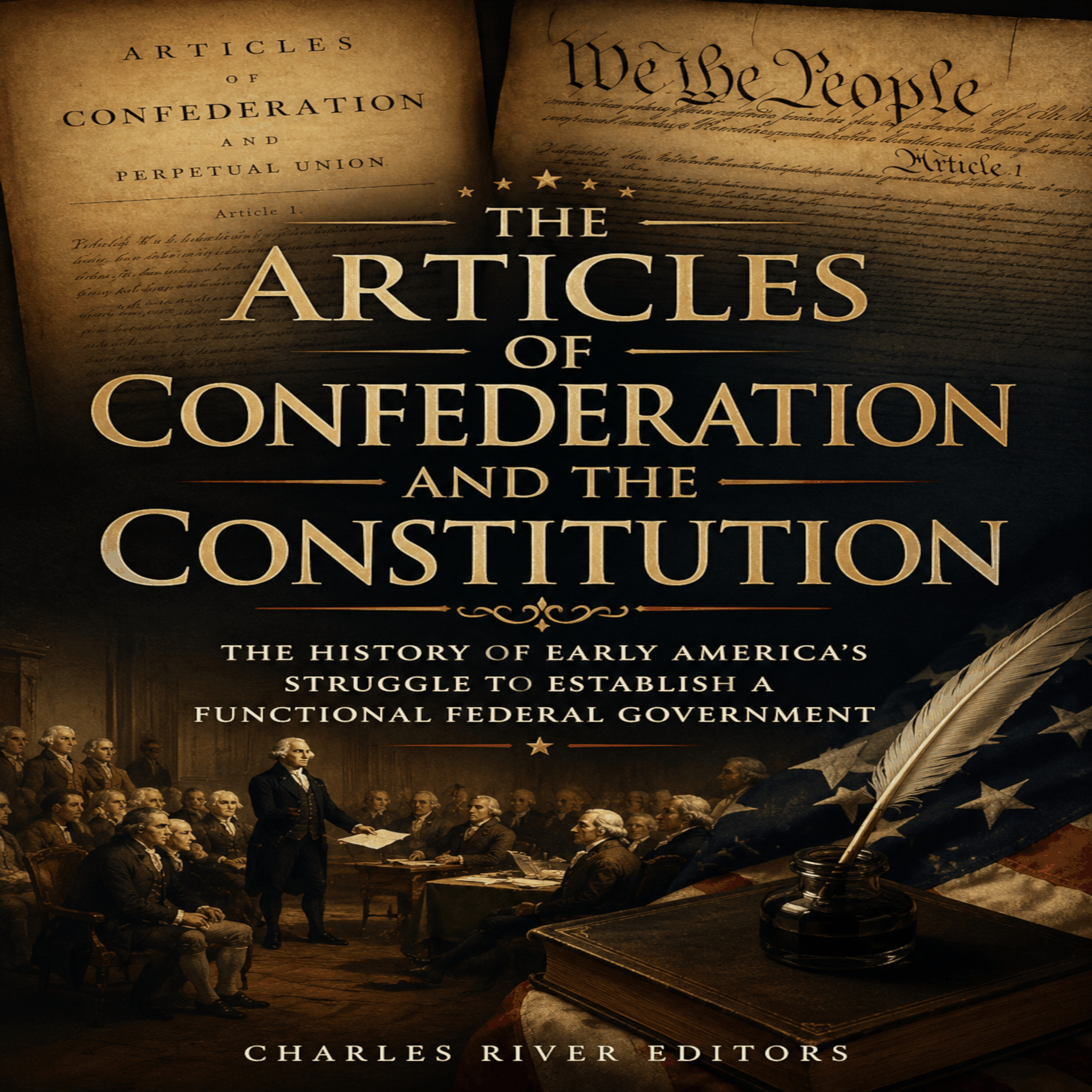
The Articles of Confederation and the Constitution: The History of Early America's Struggle to Establish a Functional Federal Government

Monthly Membership
Cancel anytime!
Memberships will renew every month
One credit every month on renewal
You can spend 1 credit every month to get an audiobook
Of all the celebrated documents in American history, one of the relics of history is the Articles of Confederation, which have been reduced to a footnote. In fact, Americans often overlook the years between the negotiation of peace in 1783 and the drafting of the Constitution in 1787, but to understand the Constitution, it's necessary to understand why it was drafted in the first place.
After the Revolution, the new United States attempted to operate under the Articles of Confederation, which had been drafted in a time of war by men who were wary of Parliamentary abuses of power. Given that context, it should not be surprising that the national government the Continental Congress crafted during the Revolutionary War was particularly weak. During the war itself, the reason Congress could not pay the soldiers in the Continental Army was because it did not have the power to tax. General George Washington pestered the Continental Congress for provisions constantly, but they could only ask for money from the states.
By 1787, it became evident that the Articles of Confederation were inadequate for the new nation. With these problems hampering the national government under the Articles of Confederation and the threat of default on the nation's massive war debt looming, plans began being made to fix the problems of the Articles of Confederation. Thus, that summer a Constitutional convention was called, and each state sent delegates to Philadelphia. Among the delegates were prominent patriots and former members of the Continental Congress, including George Washington and Benjamin Franklin.
The Constitution was a decisive move away from the Articles of Confederation, which the proponents of the Constitution claimed promoted dissonance by giving states too much autonomy. They argued that a strong federal government ought to be empowered to maintain standing armies, provide for a national militia, and be able to levy direct taxes to support defense and provide prosperity.
Praise