
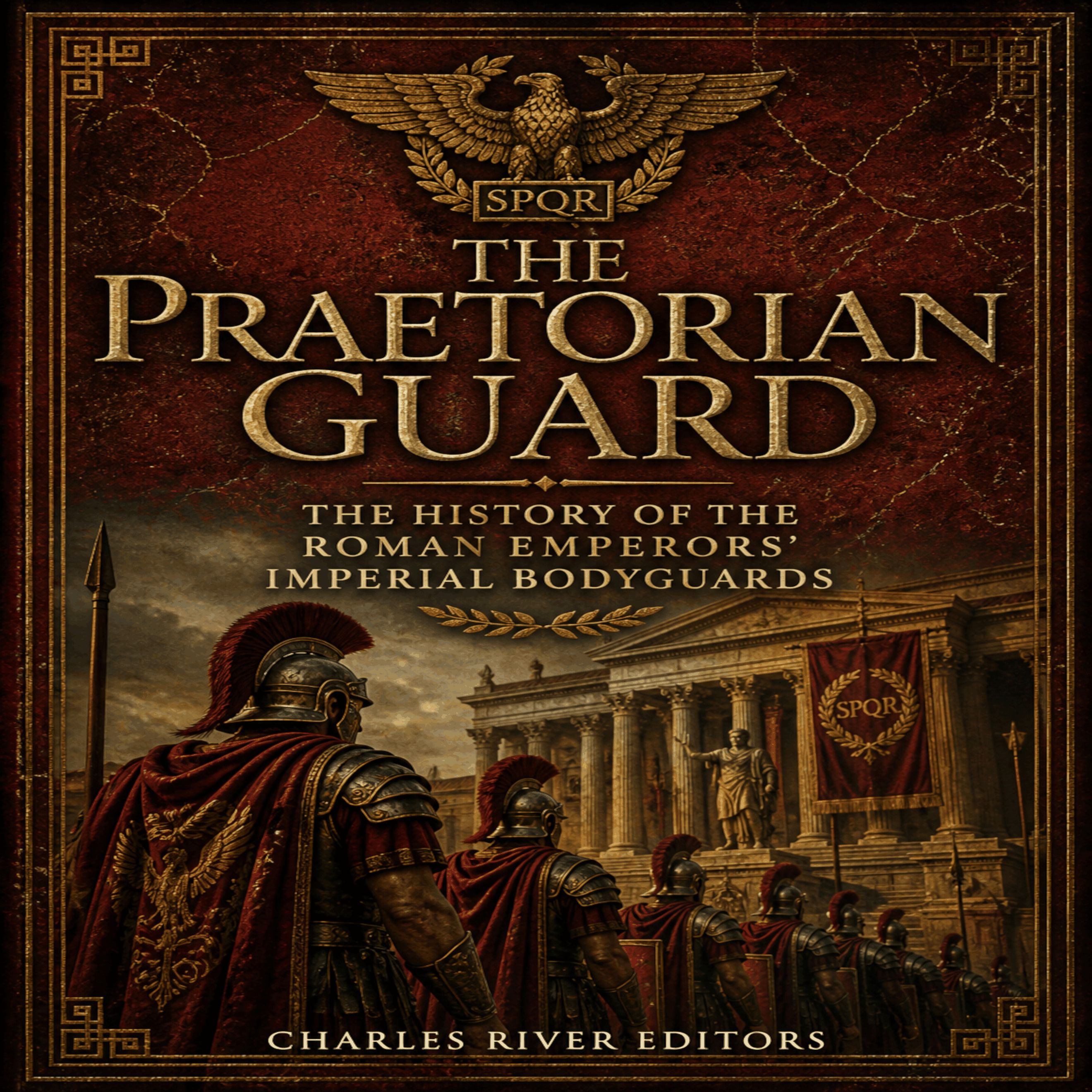
The Praetorian Guard: The History of the Roman Emperors' Imperial Bodyguards

Monthly Membership
Cancel anytime!
Memberships will renew every month
One credit every month on renewal
You can spend 1 credit every month to get an audiobook
A member of Caesar's extended family, Gaius Marius, was the military visionary who had restructured the legions and extended the privileges of land ownership and citizenship to legionaries on condition of successful completion of a fixed term of service. Marius made the army more professional and helped propel Rome's expansion, but those same reforms eventually made the legions fiercely loyal to their individual generals rather than the state, which would make Caesar's seizure of power possible and bring about the dawn of the Roman Empire.
Naturally, having military units who were only loyal to individuals also made an imperial bodyguard possible, and few institutions in the long and turbulent history of the Roman Empire characterized the internal dynamics - and potential problems - of the empire's structure like the Praetorian Guard. The Praetorian Guard was instituted by Augustus as a personal bodyguard for Rome's most powerful leaders, but it eventually evolved into a kingmaking force that could elevate emperors, manipulate politics, and ultimately weaken the very system it served protect. In that sense, the Praetorian Guard reflected Rome's transition from a republic that prided itself on civic virtue and suspicion of tyranny into an autocratic empire where the concentration of power in a single individual required both protection and coercion on a scale that didn't exist before.
This factor would prove decisive during several moments of crisis, when the question of imperial succession often hinged less on legal legitimacy than on the physical security guaranteed by the Guard. The assassination of emperors, once a shocking aberration, gradually became a common means of political change, and the Praetorian Guard frequently stood at the center of such events, either as conspirators or as the ones who determined the outcome in their aftermath.
Praise