
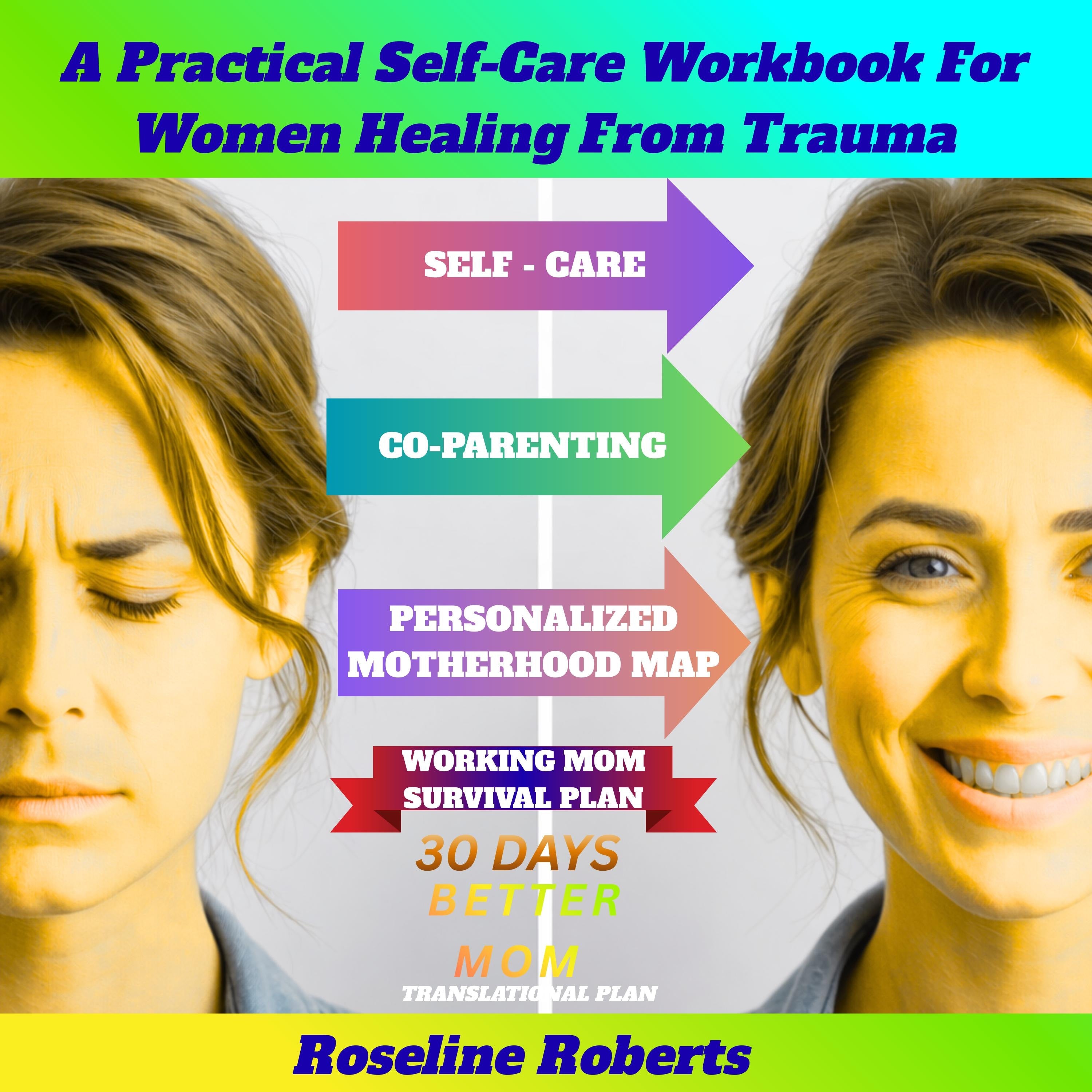
A Practical Self-Care Workbook for Women Healing from Trauma
📘 A Practical Self-Care Workbook for Women Healing from Trauma
📗 A Complete Guide to Mom Burnout, Emotional Resilience, Simple Routines, Co-Parenting, Work-Life Balance, and Parenting with ADHD
Healing doesn't have to feel overwhelming, clinical, or lonely. This compassionate workbook was created for women who are healing from trauma while still managing everyday life - work, relationships, motherhood, responsibilities, and deep exhaustion. Instead of pressure or perfection, it offers practical self-care tools that feel supportive, realistic, and grounding, even on days when energy and clarity feel limited. ⭐
🧠 This workbook gently explains what trauma does to the mind and nervous system, helping you understand why burnout, anxiety, emotional shutdown, or mental fog show up - and what actually helps when they do.
🧩 Step-by-step prompts guide you through identity rediscovery, helping you reconnect with who you are beyond survival mode, roles, or past experiences.
🕊️ With kindness and clarity, the workbook introduces emotional regulation strategies for anxiety, shame, overwhelm, and low-energy days - without forcing positivity or rushing the healing process.
🛠️ Practical routines, agreements, and low-effort systems help reduce daily stress and create more stability, even when motivation is limited or life feels unpredictable.
📘 Inside This Workbook, You'll Find:
💡 Burnout relief and nervous-system reset tools designed for women carrying invisible emotional loads
🗓️ A realistic 30-day transformation plan built on micro-steps - not pressure
🤝 Co-parenting and relationship scripts that help protect your emotional boundaries
📊 Self-checks and trackers to help you understand what's normal, what's trauma-related, and when additional support may be needed
Praise